
Mumbai, June 14, 2026, 04:31 (IST).
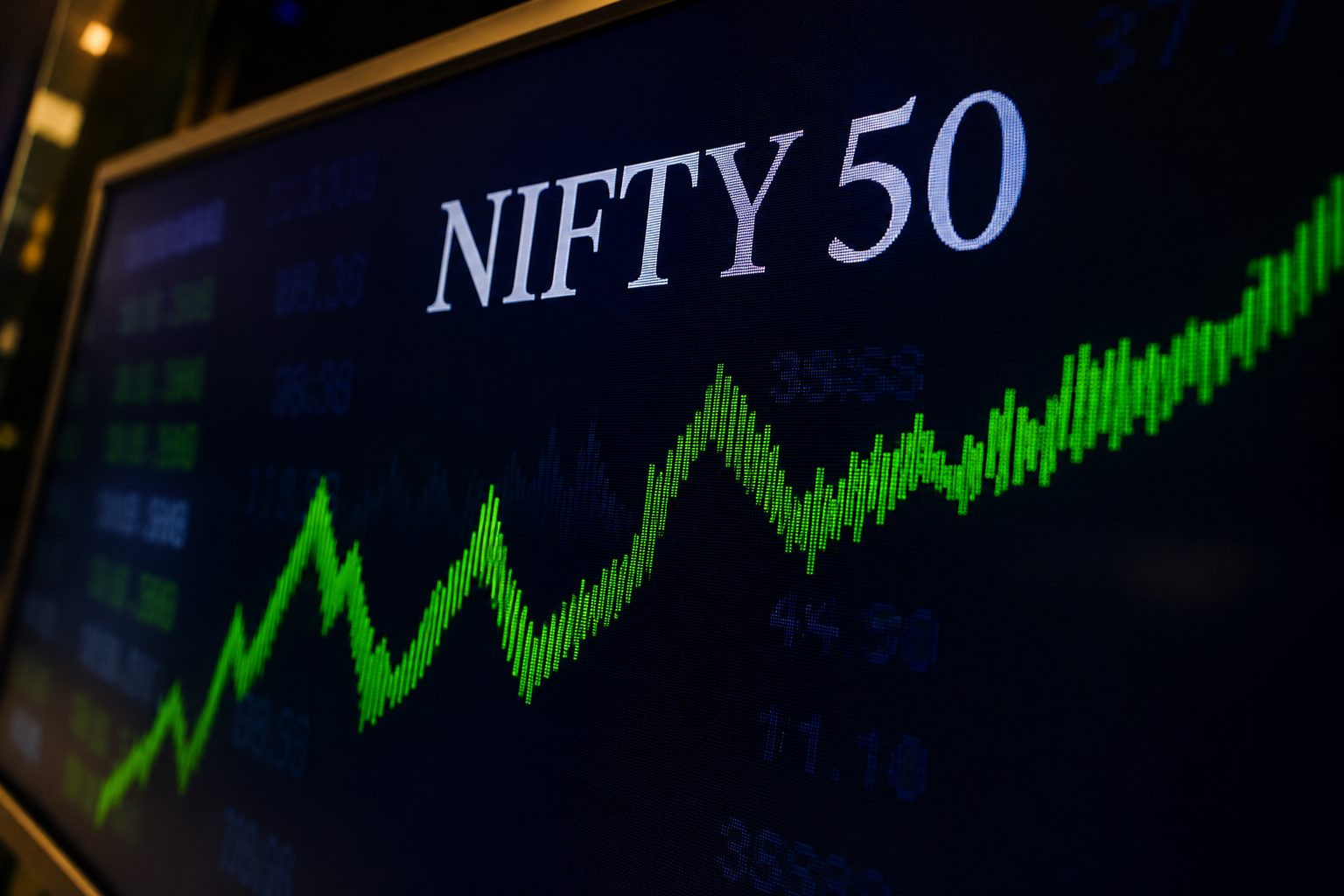
- Indian shares saw their biggest jump in two months on Friday, with Nifty 50 rising 1.99% to close at 23,622.90. The BSE Sensex added 2.3% to finish at 75,527.95. Reuters
- Traders are watching to see if U.S.-Iran peace sticks. Cheaper crude would take pressure off India’s import bill, help the rupee, and improve the inflation view. Reuters
- Markets are watching for India’s updated WPI/PPI data out June 15 and the Fed’s meeting running June 16–17, both seen as possible triggers for rate and valuation shifts. Press Information Bureau
Stocks in India started the week with momentum, facing a busy schedule ahead. The Nifty 50 and Sensex jumped Friday, tracking Brent crude’s drop near $87 on hopes for a U.S.-Iran peace deal. Reuters said Friday’s gains were the biggest for Indian stocks in two months. “The decline in crude prices, easing geopolitical fears have helped sentiment recover,” Rajesh Palviya of Axis Direct said, and he expects the support to hold for now. Reuters
India’s stock prices can react to moves like this because the country imports most of its oil. Cheaper crude can take some pressure off inflation, help with the external balance and give some lift to the rupee. The rupee finished Friday at 95.11 per dollar, up 0.7%. Brent slid to $85.80 a barrel, a three-month low, as traders unwound long-dollar bets set up during recent geopolitical worries. Reuters
Market watchers say a clear de-escalation in the Middle East could bring global buyers back to Indian equities, which have seen major selling pressure in 2026. Overseas investors have already yanked out $30 billion from Indian stocks this year, Reuters said, with financials climbing this week after the RBI relaxed overseas borrowing limits for banks. On June 12, foreign institutional investors offloaded ₹1,082.18 crore in the cash segment, but domestic institutions picked up ₹5,341.29 crore. Local funds are still absorbing the selling. Reuters
Bears say the rally still moves with oil headlines. Reuters said Saturday that U.S. President Donald Trump and Pakistan claimed a first U.S.-Iran deal might be signed Sunday, but Iran pushed back on the timing. That uncertainty means crude, the rupee and risk assets stay exposed to swings. For Indian stocks, any new oil spike threatens rate-sensitive stocks, squeezes margins for energy users and could make overseas investors pull back from emerging-market risk. Reuters
India’s domestic inflation is the next focus. The government said the consumer price index rose 3.93% in May. Food inflation was 4.78%. The market is watching for the Wholesale Price Index update due June 15. The WPI will move to a 2022–23 base year, and new producer price indices are set to come out too. These numbers will be closely watched for signals on inflation and what they might mean for company costs. Press Information Bureau
Global rates are in focus too. The U.S. Federal Reserve’s June 16–17 meeting includes a Summary of Economic Projections, so traders are watching its rate signals for clues on global liquidity and foreign inflows to India. If the Fed points to higher-for-longer rates, sectors like high-growth and export-driven names could see valuation pressure. Last week, Reuters said IT shares dropped 4.2% on AI disruption concerns and hotter U.S. inflation. Federal Reserve
Valuations look more reasonable than cheap after Friday’s rally. Trendlyne data had the Nifty 50 trading at 20.4 times earnings on June 12, with the index still off 5.08% over the past year. That points to a market that isn’t pricing in a full recovery. Investors hunting for opportunities may still look at banks, capital goods and some domestic cyclicals if oil prices settle, but broad buying stays risky if crude rises, the rupee drops again or the Fed leans more hawkish. Trendlyne