
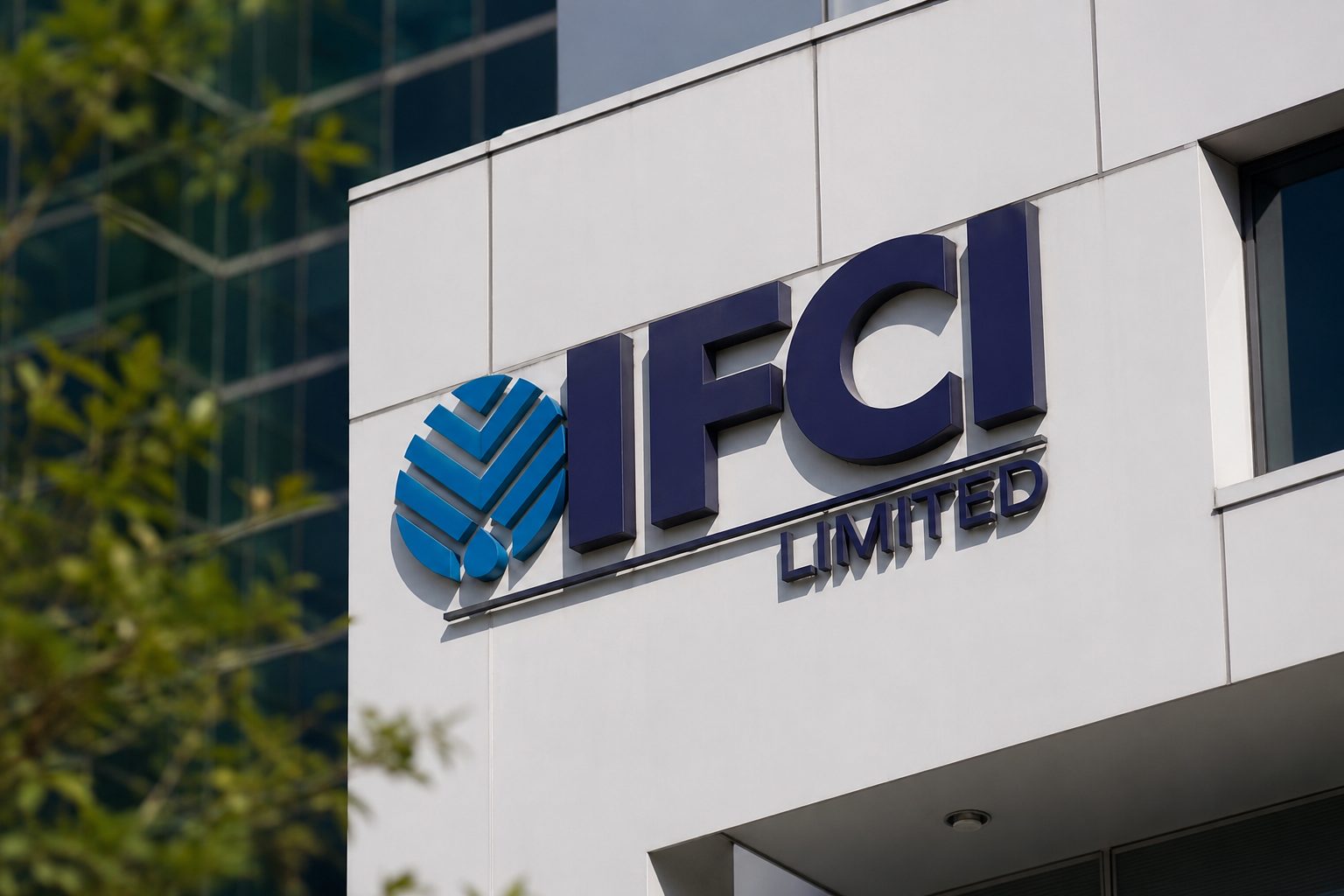
Mumbai, June 15, 2026, 01:34 IST — IFCI Ltd. closed at ₹84.57, gaining almost 20% and locking in a new 52-week high as the stock hit its upper circuit Friday. Traders pushed into IFCI after speculation that the National Stock Exchange is set to file its draft red herring prospectus, or DRHP, with SEBI this week. State-backed IFCI is seen as a way to play the potential valuation the exchange could get in public markets. Moneycontrol
Indian stocks rallied, with the Nifty 50 up 1.99% at 23,622.90 and the BSE Sensex climbing 2.3% to 75,527.95 as crude oil prices dropped and global risk appetite picked up. “The decline in crude prices, easing geopolitical fears have helped sentiment recover and this could continue in the near term,” Rajesh Palviya, head of research at Axis Direct, told Reuters. Reuters
IFCI shares are reacting to the company’s indirect link to NSE via its holding in Stock Holding Corporation of India Ltd. ETMarkets said IFCI owns 52.86% of SHCIL, which held 4.4% of NSE in the December quarter. That stake ties IFCI to any shifts in sentiment about NSE’s upcoming initial public offering. The Economic Times
NSE may file its draft red herring prospectus with SEBI for a share sale that could top ₹20,000 crore and value the bourse near ₹5 trillion, Business Standard reported. The IPO is expected to be an offer for sale by current shareholders, not a fresh issue, the report said. NSE confirmed its board gave the nod to the IPO plan on February 6 after getting a no-objection from SEBI, but refused to give further details, according to Business Standard. Business Standard
IFCI’s rally is about how investors value its portfolio, not news from its business. The company calls itself a systemically important non-deposit taking NBFC in the public sector, focused on financing industry and giving both government and corporate advisory services. NBFC stands for a non-bank financial company, meaning it offers credit or other financial services but does not function as a full bank. IFCI
NSE filing its DRHP could let investors see a more transparent valuation for IFCI’s indirect stake in the exchange via SHCIL. If NSE’s listing stays on track, investors might still look at IFCI as a holding company with exposure to the bourse. That view could stick after the recent run-up in IFCI shares and the wider bounce in financials.
Bearish investors point to the stock’s sharp run-up before any official NSE notice. They also flag risks in IFCI’s own books. ICICI Direct’s results show FY26 total income at ₹2,134.27 crore with net profit of ₹434.71 crore, but flagged gross NPAs at ₹3,589.97 crore and a gross NPA ratio at 95.79%. Capital risk adequacy ratio sat at minus 18.78%, missing regulatory needs. NPAs are loans where payments have stopped. ICICI Direct
IFCI traded at ₹84.57, putting its market cap at about ₹22,786 crore. The price-to-book ratio was 2.55, so the market is pricing shares at over two and a half times book value. That valuation points to risk, not a straightforward bargain. The next swing depends on NSE and its DRHP filing—investors are waiting to see details like valuation, shareholder moves, and schedule. Any letdown or hold-up could send IFCI down from its 20% upper-circuit jump. ICICI Direct